Best Headless CMS for Enterprise Deployments

Most enterprise CMS evaluations stall in the same place. Teams spend weeks comparing feature matrices, then end up with a shortlist that still doesn't tell them which platform to pick. The problem isn't the matrices. It's that the feature comparison answers the wrong question.
The right enterprise headless CMS isn't the one with the most features; it's the one that fits how your team operates today and where it's going next. After years of implementing and advising on most of the major platforms in this space, the pattern holds across project after project. Operational fit, not feature count, is what separates a CMS decision teams are still happy with two years later from one they're already replacing.
This article narrows the 12 platforms most likely to land on your shortlist against the four operational questions that determine the outcome of most enterprise evaluations.
Headless CMS vs. Monolithic CMS
Before comparing platforms, it's worth being precise about what makes a CMS "headless" and why that distinction matters at enterprise scale.
A traditional, or monolithic, CMS bundles content storage, editing and presentation into a single system. WordPress and Drupal are the most common examples. Content lives in the same application that renders the website, which keeps things simple for small sites but creates friction as teams grow, channels multiply and performance expectations rise.
A headless CMS separates content from presentation. Content is stored and managed in a backend-only system, then delivered through APIs to any frontend: a website, a mobile app, a digital signage system, a customer portal or an AI assistant. Developers choose the framework that fits the use case. Marketers manage content in one place and distribute it everywhere.
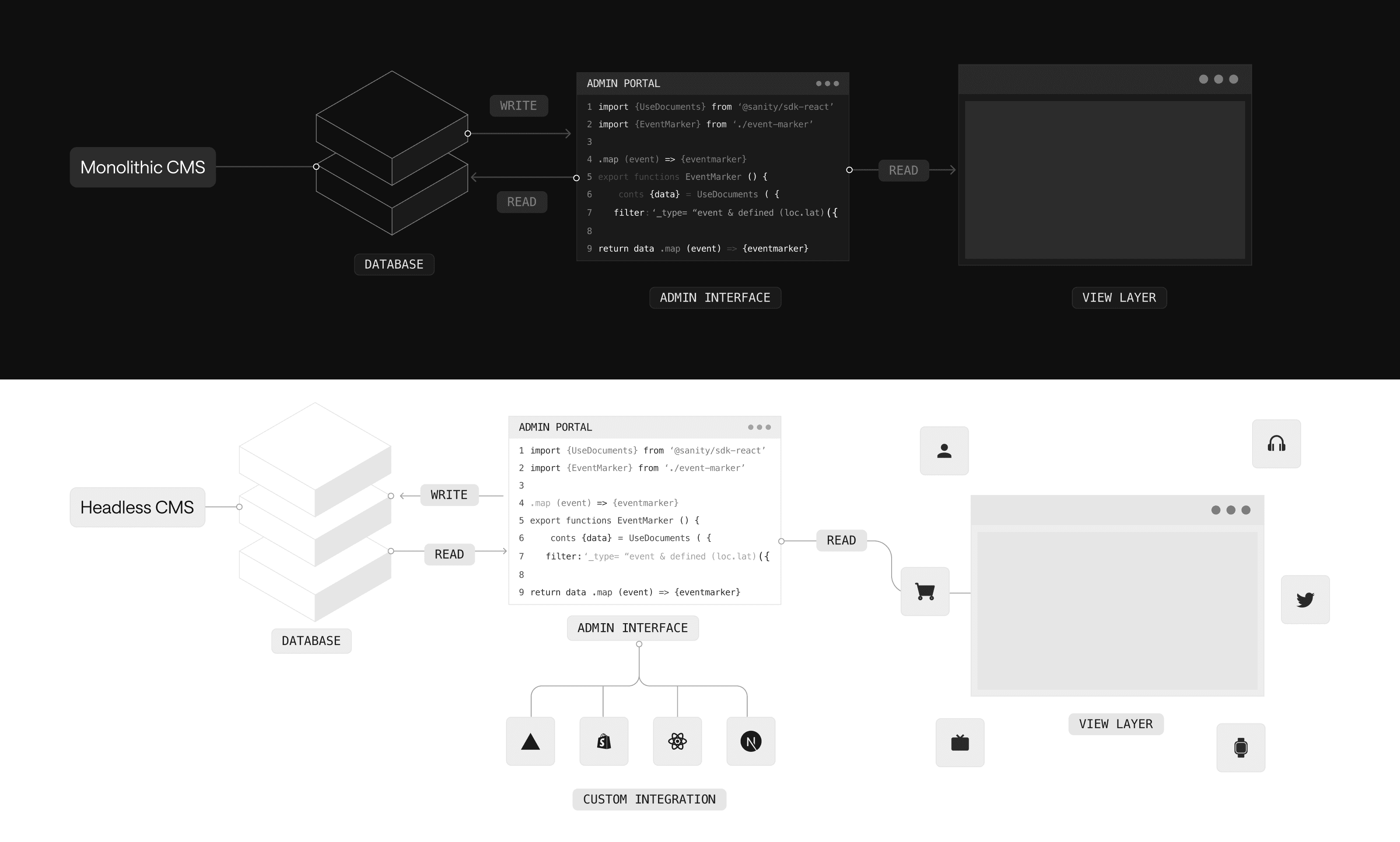
The practical difference shows up in three places:
- Performance. Modern frontend frameworks like Next.js, Nuxt and SvelteKit can be tuned for Core Web Vitals in ways monolithic templates can't. Faster load times improve engagement, SEO and conversion.
- Channel reach. A single content model can serve every surface your brand touches, without duplicate publishing.
- Team independence. Marketing teams ship campaigns without filing engineering tickets. Engineering builds without inheriting CMS theming constraints.
For a deeper breakdown of the architectural differences, see our guide on headless vs. traditional CMS.
Why Enterprise Teams Are Moving to Headless
The shift to headless isn't theoretical at this point. It's driven by problems monolithic platforms can't solve at enterprise scale, surfaced repeatedly in conversations with marketing leaders, web strategists and engineering teams evaluating their stack.
1. Your website stops being a developer bottleneck
The most common complaint about monolithic CMS platforms isn't about features. It's about velocity. Marketing teams describe waiting on engineering for routine updates, landing page builds and campaign launches that should take hours but take weeks. Engineering teams describe the same problem from the other side: a backlog of CMS work that pulls senior developers away from product to ship marketing pages.
Headless platforms with strong editorial interfaces and modular components remove that dependency. Marketing publishes campaigns, tests variants and updates content on their own timelines. Engineering reclaims the time it was spending on CMS theming work and routes it back to product engineering, where the return is higher.
2. Structured content becomes reusable infrastructure
Enterprise content isn't a flat list of pages. It's a network of related assets: product information used on a marketing site, in a sales deck, inside a help center and increasingly inside an AI assistant. When content lives inside a monolithic CMS, the same product description gets rewritten in three or four places, drifts out of sync and creates compliance and brand consistency risk.
Headless platforms model content as structured data, not as pages. A product description is written once, tagged with metadata and pulled into every surface that needs it through APIs. Localization, omnichannel distribution and AI-readability all build on that same structured foundation. Teams that approach headless as "the same website with a different backend" miss the point. The real value is treating content as infrastructure that scales across products, regions and channels without duplicating the work.
3. Design systems only work if the CMS supports them
Most enterprise web teams have a design system. Few have a CMS that enforces it. The result is predictable: components drift, one-off page builds accumulate, and within 18 months the site looks and behaves like four different sites stitched together.
Headless platforms built around component-driven content models close that gap. Editors compose pages from a library of approved components rather than building custom HTML in a WYSIWYG. Design governance moves from a document into the publishing workflow itself. Brand consistency becomes a default of the system rather than a constant cleanup project.
4. Enterprise teams need parallel workflows, not sequential ones
Monolithic platforms enforce a sequential workflow by default: design hands off to engineering, engineering hands off to marketing, marketing hands off to QA. Each handoff adds delay, and any change at one stage cascades back through the others.
Headless architectures let those workflows run in parallel. Designers iterate on components in the design system, engineers integrate them into the platform, marketers populate them with content and analytics teams instrument them for measurement, all at the same time. The launch becomes a coordination problem rather than a queue. For enterprise teams trying to compress campaign cycles or run more concurrent experiments, that parallelism is often the biggest operational gain the migration delivers.
5. Replatforming is increasingly about governance, not just flexibility
Earlier conversations about headless centered on developer flexibility. Recent ones center on operational risk. As CMS chaos compounds (plugin sprawl, inconsistent publishing standards, unclear permissions across distributed teams), flexibility without structure starts to look like a liability rather than a feature.
Enterprise headless platforms now win evaluations on governance dimensions: role-based permissions, audit logging, structured publishing workflows, content approval chains and clear separation between content creators and content publishers. Flexibility still matters, but the question buyers ask first has shifted to whether the platform can keep a growing team out of trouble.
6. AI readiness is reshaping CMS conversations
A year ago, AI readiness was a future-state concern in CMS evaluations. Now it's a present-state requirement. Marketing teams want their content to surface in AI search results from ChatGPT, Perplexity and Google's AI Overviews. That requires structured metadata, clean semantic markup and content modeled in ways large language models can parse cleanly.
Monolithic platforms make this harder than it needs to be. Inline HTML, page-bound content and inconsistent metadata leave content that LLMs treat as low-quality or skip entirely. Headless platforms with structured content and explicit schemas give AI systems exactly what they need to retrieve, summarize and cite content accurately. Future-proofing for AI search isn't a separate initiative on a headless platform; it's a natural byproduct of how content is already modeled.
7. Continuous evolution replaces the redesign cycle
The traditional enterprise redesign cycle runs every two to three years: months of discovery, months of design, months of build, a launch event, then years of slow decay until the next cycle starts. Headless architectures change that pattern.
Because content is modeled as structured data and frontends are decoupled from the CMS, individual components, templates and entire content types can be updated independently. The brand refresh ships without waiting for a content migration. The new pricing page launches without rebuilding the navigation. Iteration becomes the default mode rather than a special event. Enterprise teams that have made this shift describe their website less as a project that ends and more as a product that compounds.
The shift is real, but the platforms differ enough that the right answer isn't obvious. The next section is the four-question filter that narrows the field.
The 4 Questions to Ask Before Choosing a Headless CMS
Four questions narrow most enterprise evaluations faster than any feature matrix. Before booking a single demo, answer these questions and the platform decision narrows itself.
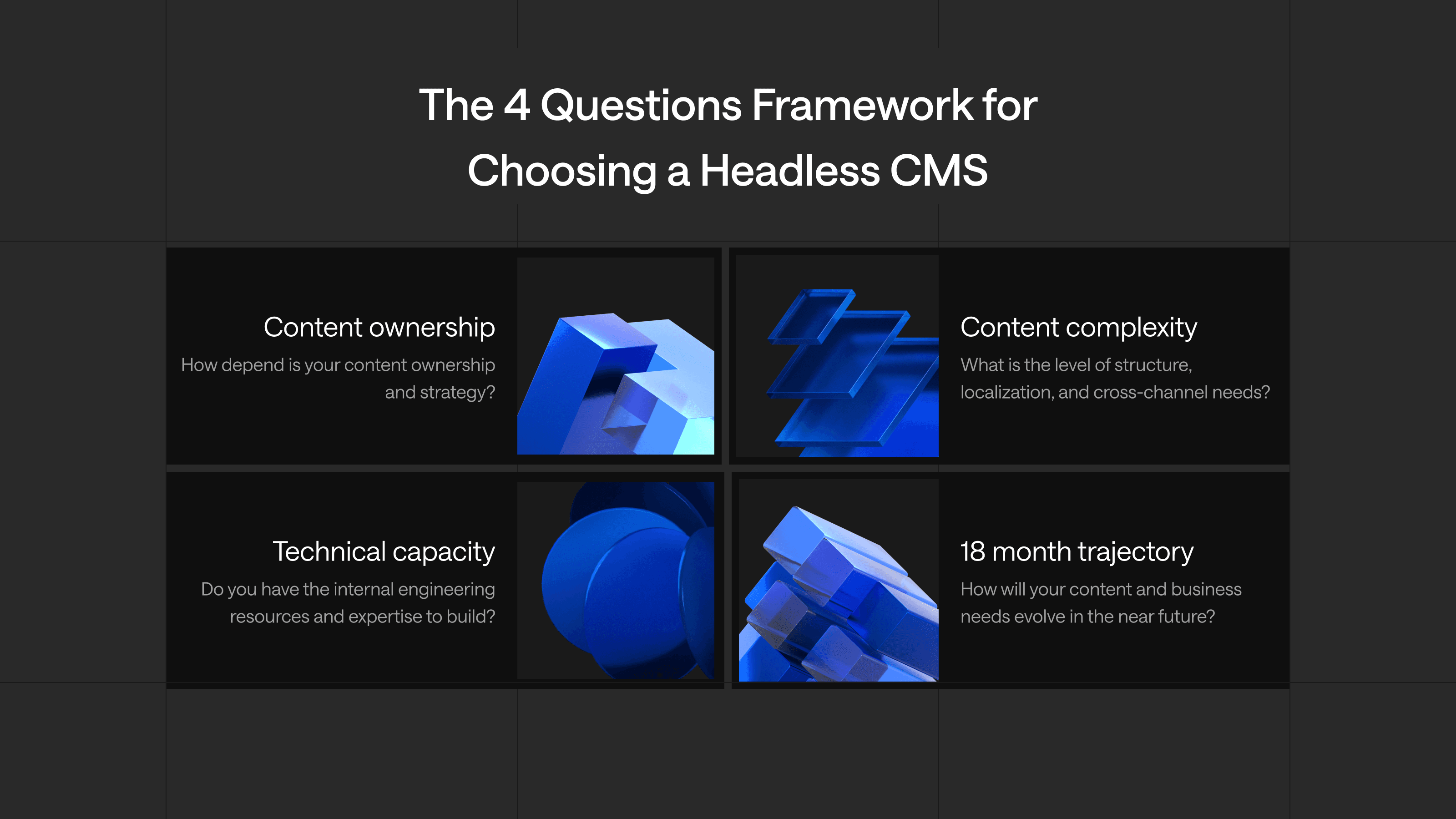
1. Who owns content day to day?
This is the question that determines whether you optimize for editor experience or developer experience, and the two pull platforms in opposite directions.
If marketing needs to publish and iterate without filing engineering tickets, the editing interface matters more than the underlying schema control. Visual editors and component-based platforms (Storyblok, Builder.io) make sense here. The tradeoff is some flexibility in how content is modeled.
If engineering owns the content architecture and marketing operates within defined structures, schema control and developer tooling take priority. Schema-driven platforms (Sanity, Contentful) make sense here. The editing experience is more form-based, but the content model can be precisely tailored to the operational reality.
There's no neutral answer to this question. Picking the wrong side leaves either marketing waiting on dev cycles or engineering rebuilding the same constraints into a more flexible platform.
2. How complex is your content model?
The complexity of what you publish determines how much structure your platform needs to enforce.
A marketing site with landing pages, blog posts and a few product pages has a flat content model. Most platforms handle this well, and the editing experience tends to be the deciding factor. A multi-product catalog with localized content across 15 markets, multiple buyer personas and content reused across web, mobile, and email has a deeply structured content model. Here the platform's content modeling primitives, reference handling and API depth matter more than visual editing.
Underestimating this dimension is the most common evaluation mistake. Teams pick a platform optimized for page building, then discover six months in that they need to model relationships, localizations and reuse patterns the platform wasn't built for. Migrating out of that is expensive. Building the content model on paper before the demo phase prevents it.
With those four questions answered, the platforms below are the ones that consistently make enterprise shortlists.
3. What's your technical capacity?
Every headless platform requires more engineering investment than a monolithic CMS. The question is how much, and whether you have it.
Schema-driven platforms like Sanity require real developer time to configure the editing interface, define content types and build out the integrations. The payoff is precise control. Self-hosted options like Strapi and Payload add infrastructure ownership on top: hosting, security patches, scaling, uptime. Managed platforms with stronger out-of-the-box editorial experiences (Storyblok, Contentstack) trade some customization depth for faster time-to-value.
The fit depends on the team you have, not the team you plan to hire. Evaluations that assume future engineering capacity tend to ship platforms the current team can't fully operate, which delays the value the migration was supposed to deliver.
4. Where are you heading in 18 months?
CMS migrations are expensive and disruptive. The right platform for your current state can become the wrong platform fast if you're about to outgrow it.
Specifically: an IPO changes the compliance and governance requirements (audit trails, role-based permissions, SSO depth). An acquisition adds content sources and editorial teams that need to merge into the platform. International expansion introduces localization, regional hosting and translation workflow requirements that some platforms handle natively and others bolt on awkwardly. A move from PLG to enterprise sales adds account-based content, personalization and gated experiences to the requirements list.
It's worth evaluating against trajectory, not just current state. The platform that fits today and the platform that fits in 18 months aren't always the same one, and replacing a CMS twice in two years is a worse outcome than picking the slightly more demanding platform from the start.
Top Recommendations for Enterprise
These are the platforms that belong on a shortlist for most enterprise evaluations. Each has a different strength, but they've consistently proven themselves in production.
Sanity
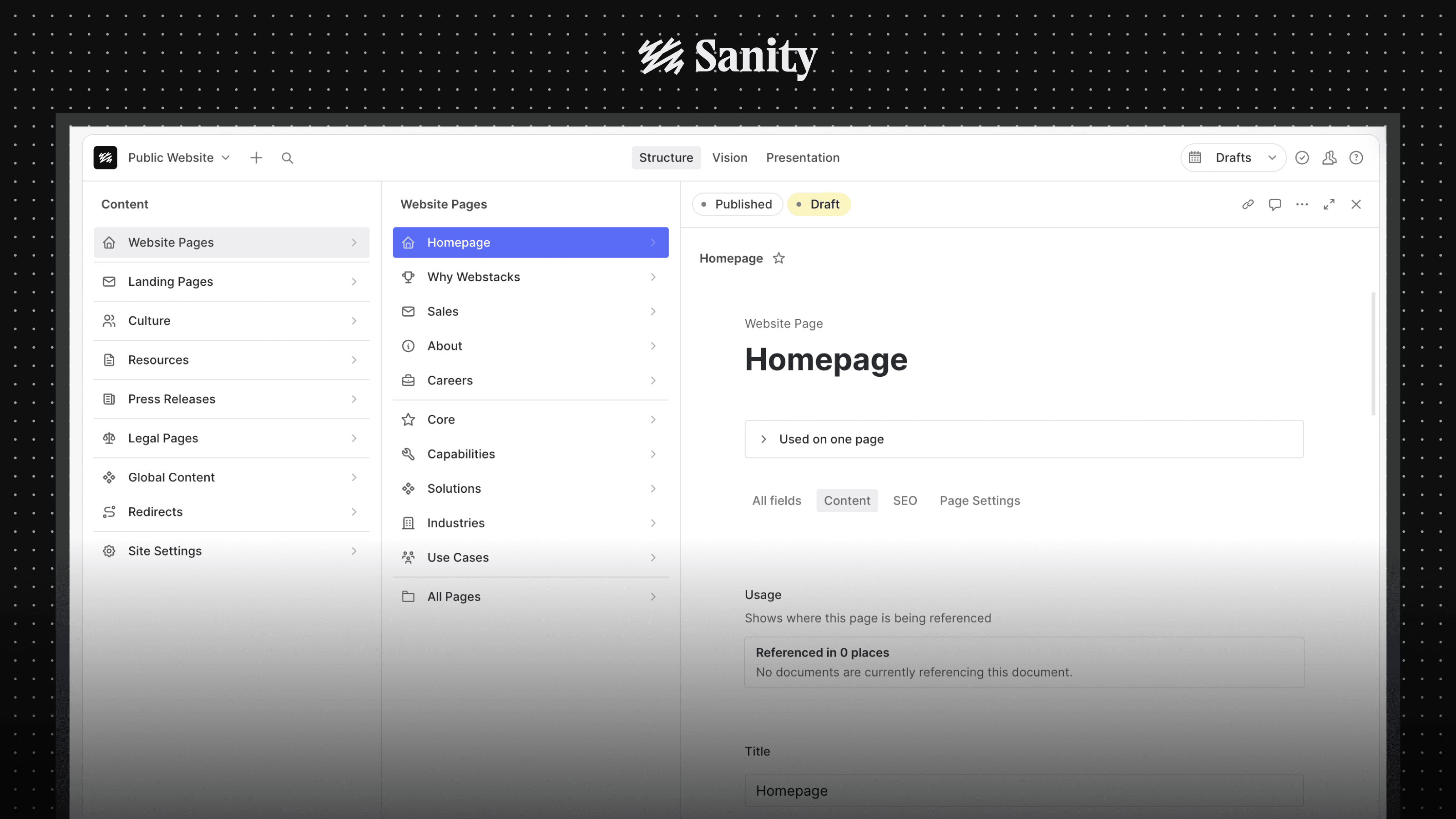
Sanity gives developers the most flexibility of any platform in this group. The content model is schema-driven and fully customizable, and Sanity Studio is a React application that can be configured and extended to match a team's specific workflow.
Strengths:
- Schema-driven content modeling with full developer control over fields, relationships and validation
- Sanity Studio customization through React, allowing the editing experience to be tailored per team
- GROQ query language for precise control over data fetching and shaping
- Presentation tool for visual editing through click-to-edit overlays on a live preview
- Real-time collaboration so multiple editors can work on the same document simultaneously
- Format-agnostic Content Lake that serves websites, mobile apps, email systems and third-party integrations through the same API
Best fit: Organizations with capable technical teams that want control over both the content model and the editing experience, particularly for multi-channel delivery and deeply structured content.
Tradeoffs:
- Studio configuration requires real developer time to set up well
- Default media management benefits from the Media Plugin or Media Library add-on
- Setup curve can be steep for teams without dedicated engineering resources
Contentful
Contentful has the longest track record in the enterprise headless CMS space. It's widely adopted across Fortune 500 companies and has the most mature ecosystem of integrations, documentation and community resources.
Strengths:
- Flexible content modeling with strong support for complex relationships between content types
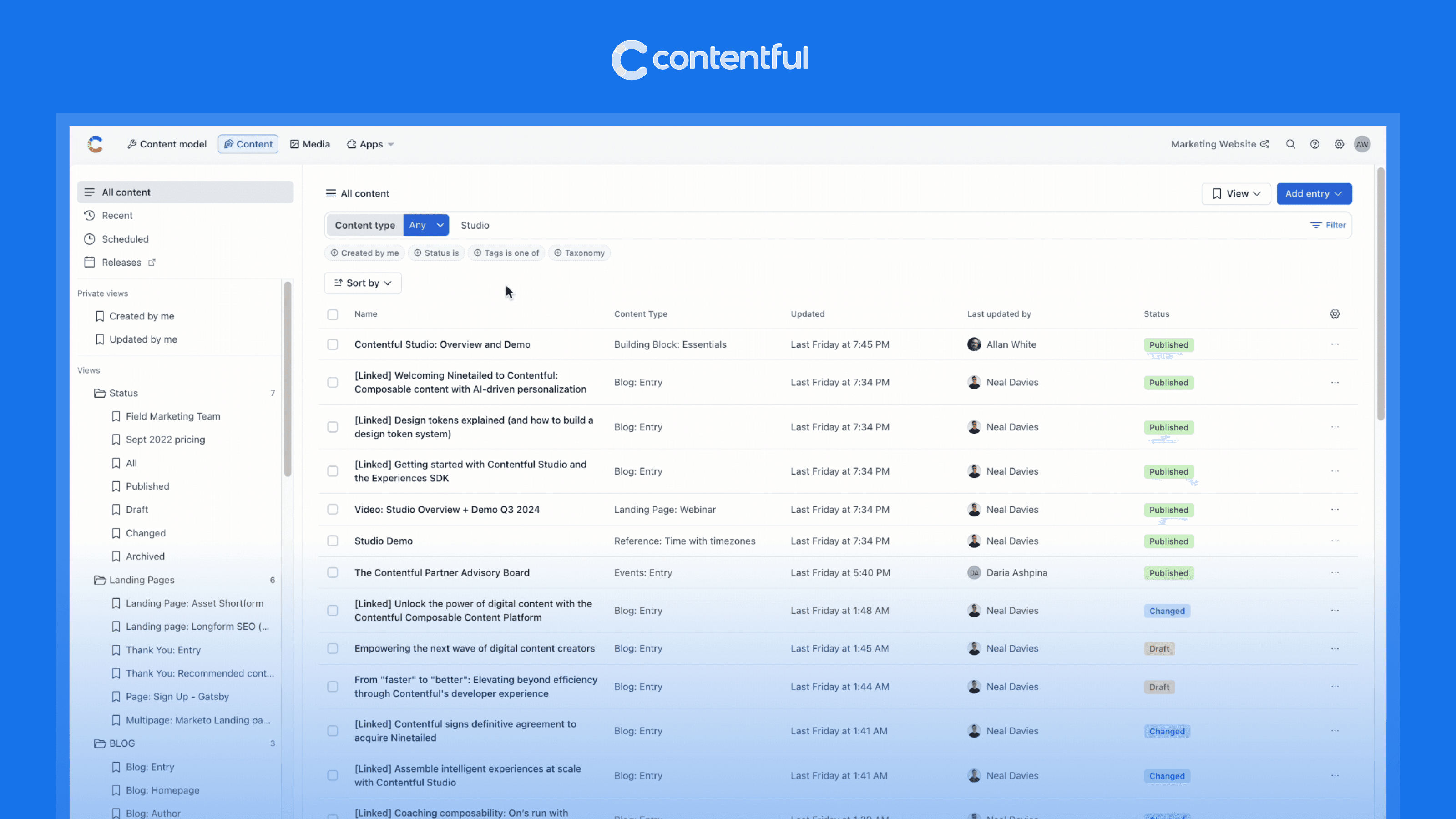
- Form-based editing interface that's straightforward for non-technical editors
- Contentful Compose adds a page-building layer for teams that need it
- Sophisticated role-based permissions and audit logging among the best in the category
- Reliable API performance and global CDN at scale
- Mature ecosystem of integrations, documentation and community resources
Best fit: Regulated industries where audit trails, granular permissions and compliance documentation are procurement requirements, plus large organizations that need ecosystem maturity.
Tradeoffs:
- Editing experience is functional but not modern compared to platforms with visual editing
- Less empowering for marketing teams that want inline editing or drag-and-drop page building
- Pricing scales with content volume and API calls, which can become significant as you grow
Storyblok
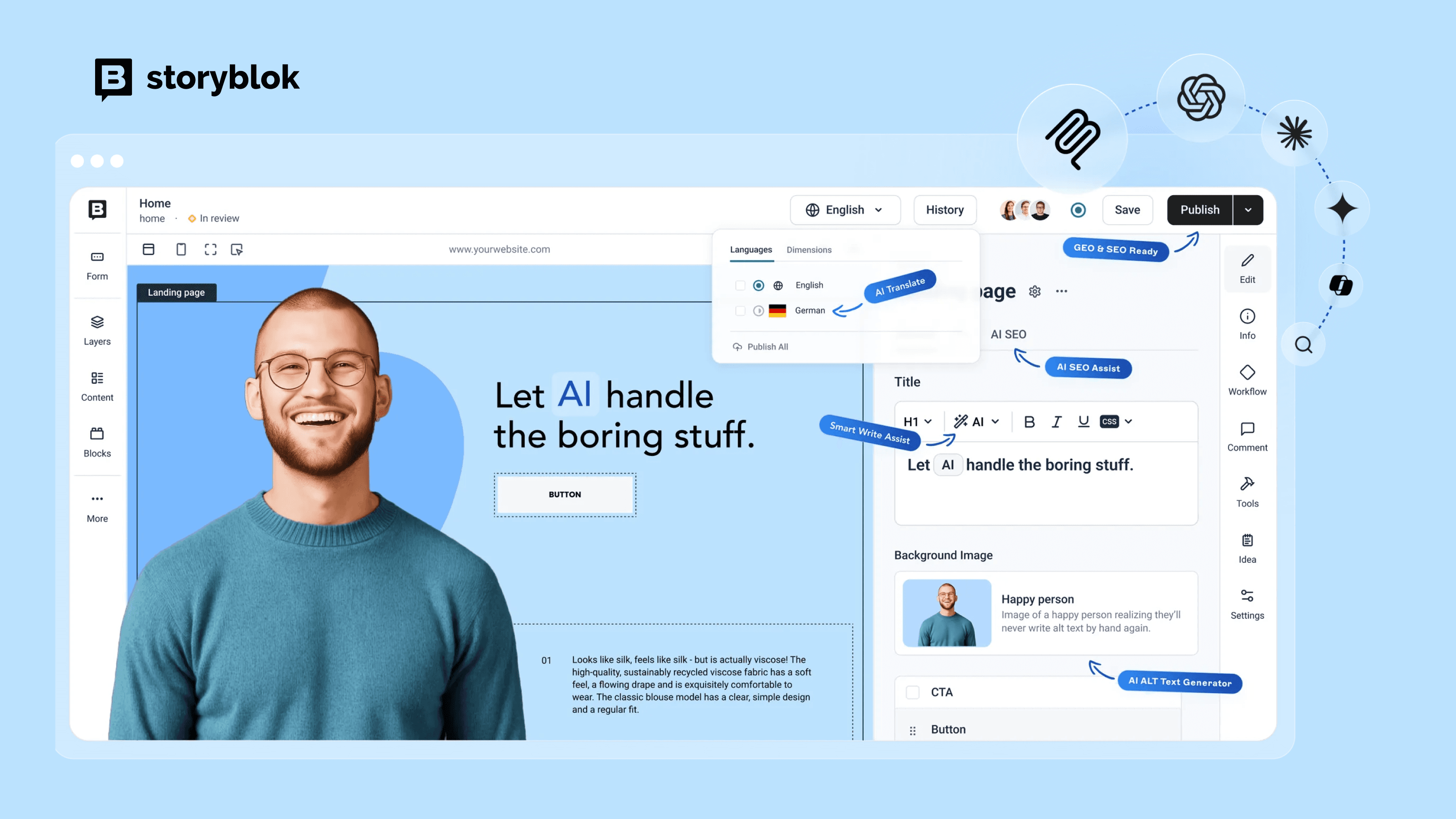
Storyblok offers the most straightforward out-of-the-box visual editing experience in this group. Editors work directly on a rendered preview, with inline text editing, drag-and-drop component arrangement and real-time device preview.
Strengths:
- True visual editor with inline editing, drag-and-drop components and real-time device preview
- Component-based content model that maps directly to what editors see and manipulate
- AWS infrastructure with a global CDN and regional data center options
- Enterprise security certifications including ISO 27001, SOC 2 Type 2, GDPR and HIPAA
- Strong marketing autonomy that closes the gap between content creation and publishing more effectively than form-based editors
Best fit: Organizations where marketing autonomy is the primary goal and the content model maps cleanly to reusable visual components.
Tradeoffs:
- Documented cases of significant pricing increases with limited notice, so long-term contract terms are worth negotiating carefully
- Enterprise feature gaps around user role customization and content block management
- Visual editor introduces some constraints to content modeling compared to fully schema-driven platforms
Builder.io
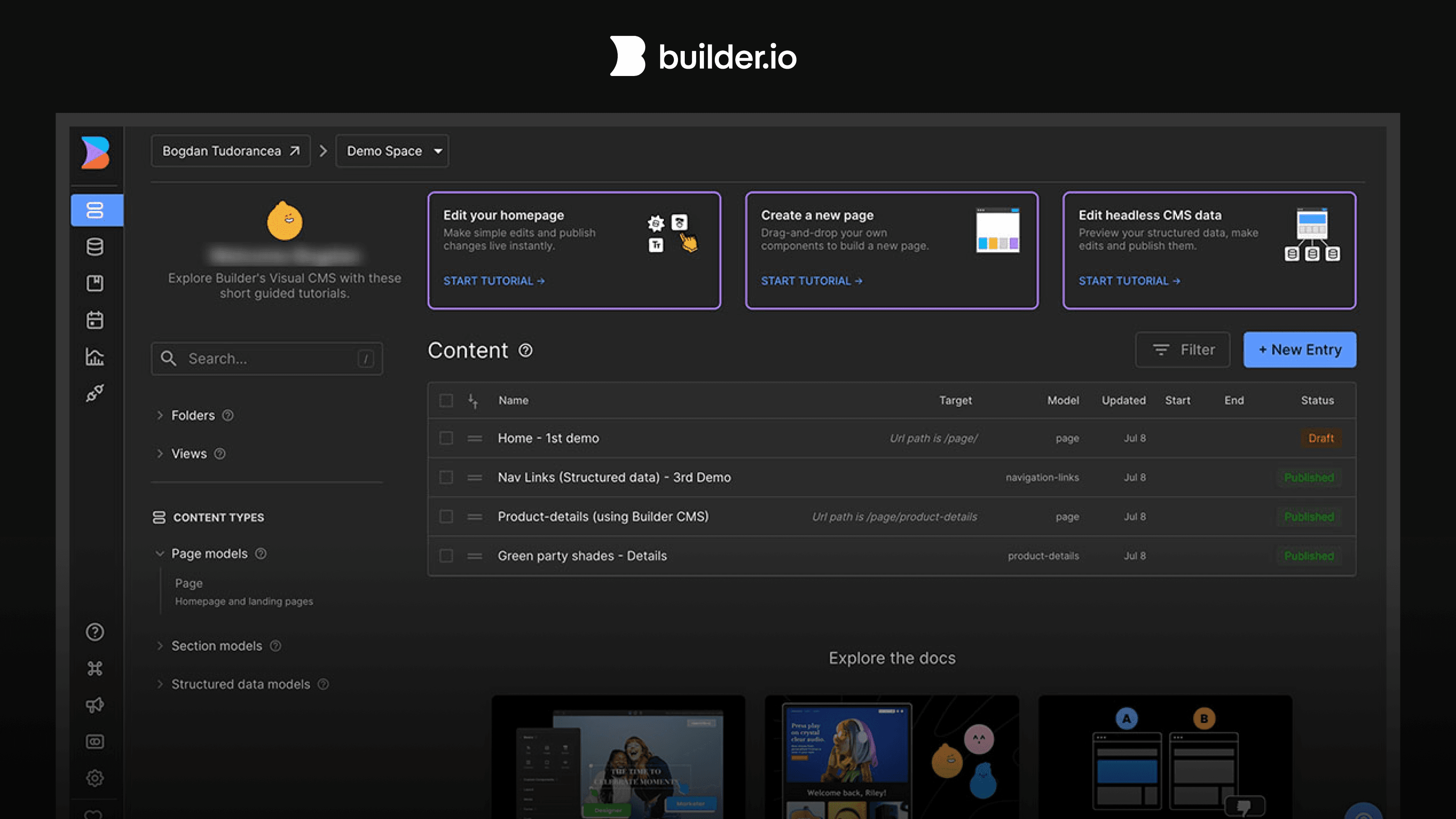
Builder.io approaches the problem differently than the others on this list. It's a visual development platform that integrates with an existing codebase and component library, letting marketing teams compose pages from actual production React, Vue, Angular or Svelte components.
Strengths:
- Uses production frontend components, not CMS-defined blocks, so the visual editing experience matches what ships
- Framework SDKs for Next.js, Gatsby, Remix and others that render Builder-managed content within an existing application
- AI-powered content generation and experimentation built into the platform
- A/B testing baked in as part of the content workflow
Best fit: Teams whose core use case is page building, marketing landing pages and rapid experimentation, particularly when they already have a mature production component library.
Tradeoffs:
- Content modeling is more page-oriented than the structured content approach of Sanity or Contentful
- Less natural for deeply structured, multi-channel content (product data, documentation, content serving multiple endpoints)
- Strongest for marketing pages, weakest for complex content reuse across surfaces
DatoCMS
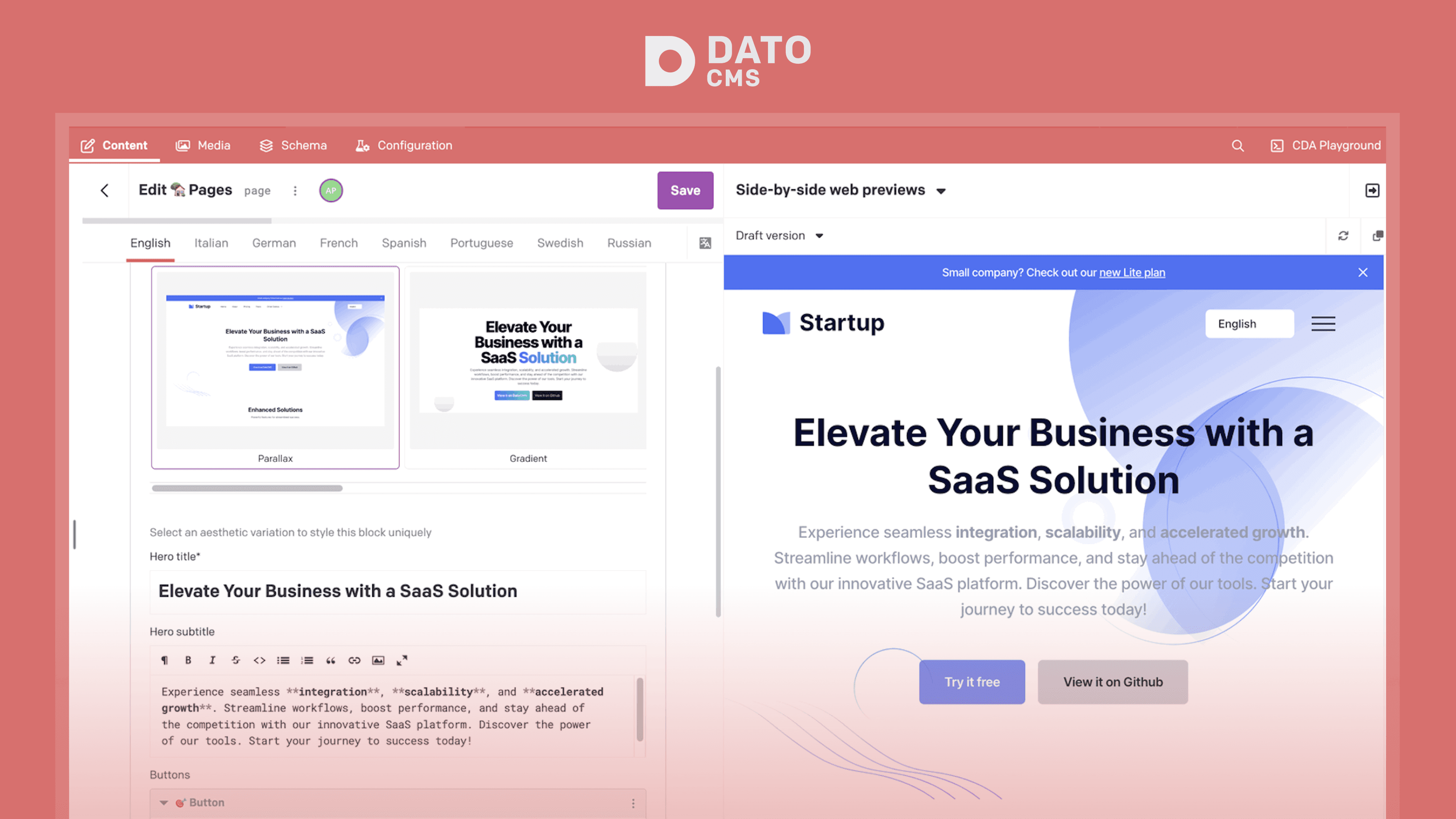
DatoCMS is a well-executed headless CMS that tends to fly under the radar in enterprise conversations dominated by Contentful and Sanity. It pairs a clean content modeling interface with strong performance defaults.
Strengths:
- Clean content modeling interface that's intuitive for both developers and editors
- Solid GraphQL API with well-designed field types
- Built-in image optimization through Imgix integration
- Thoughtful structured text field type for editorial content
Best fit: Mid-market to enterprise teams that want a capable structured content platform without the complexity or cost of Contentful.
Tradeoffs:
- Smaller community and fewer integrations than top-tier enterprise platforms
- Less brand recognition can make it a harder sell in procurement conversations
- Ecosystem size limits options for specialized integrations
Contentstack
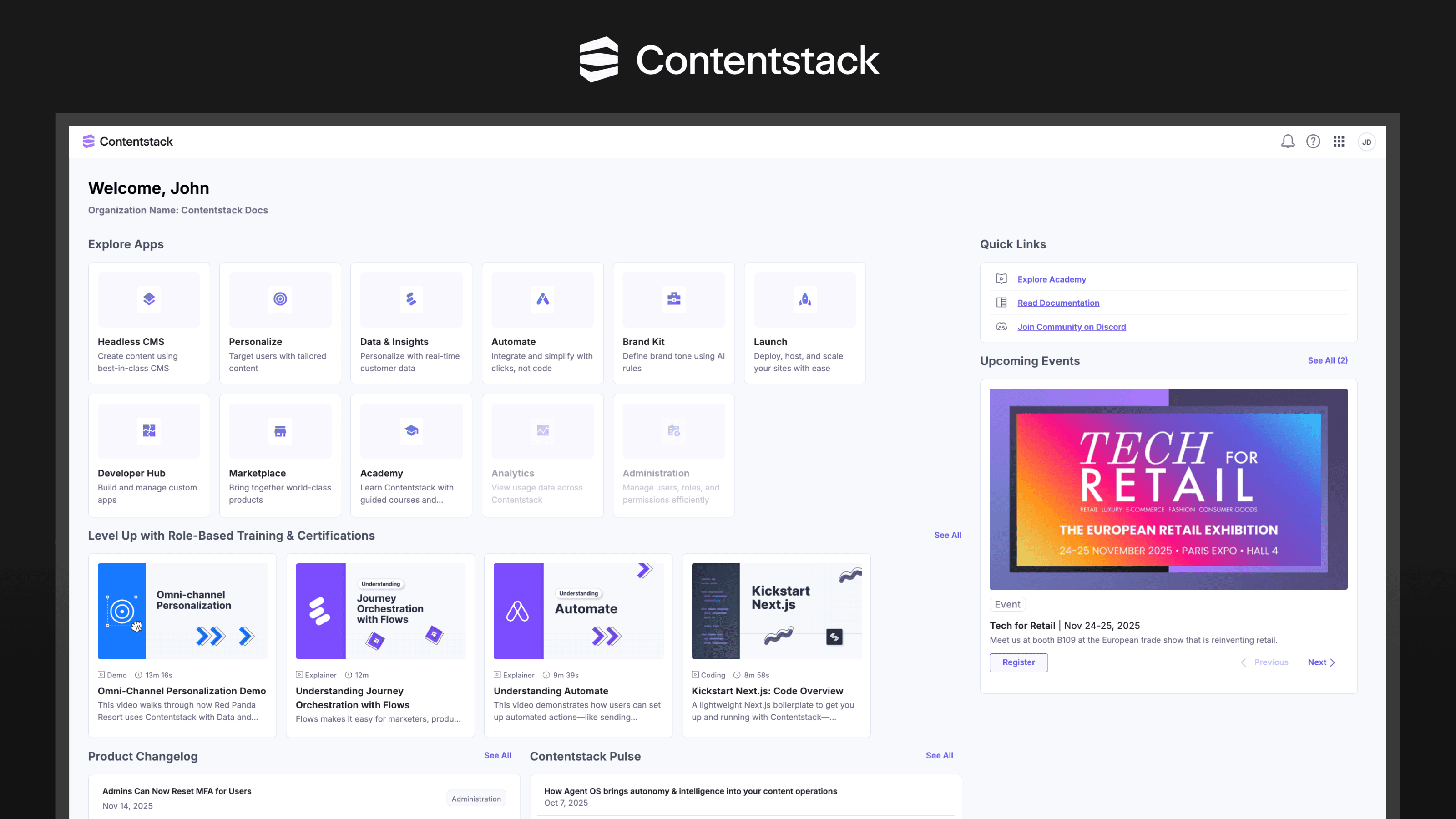
Contentstack shows up in enterprise evaluations for organizations that prioritize polished editorial workflows and multi-channel distribution. It was recognized as a Leader in the Forrester Wave™: Content Management Systems (CMS), Q1 2025, the only pure headless provider named a Leader.
Strengths:
- Polished editorial interface accessible to non-technical users
- Strong workflow automation for complex publishing and approval processes
- Flexible content modeling with robust omnichannel delivery
- Forrester Wave™ Leader designation in Q1 2025, evaluated against 13 providers on 19 criteria
- Solid enterprise traction across large publishing operations
Best fit: Organizations with complex publishing workflows, multi-tier approval processes and a need for polished editorial experience out of the box.
Tradeoffs:
- Smaller ecosystem than Contentful, with fewer community integrations and third-party resources
- Less of a fit for evaluations that weight developer flexibility or visual editing heavily
- Brand recognition is strong in enterprise circles but lower than Contentful in broader procurement
Platforms Worth Evaluating for Specific Requirements
These platforms are strong in more specific contexts. They may not be the default recommendation, but for the right situation they're worth serious consideration.
Prismic
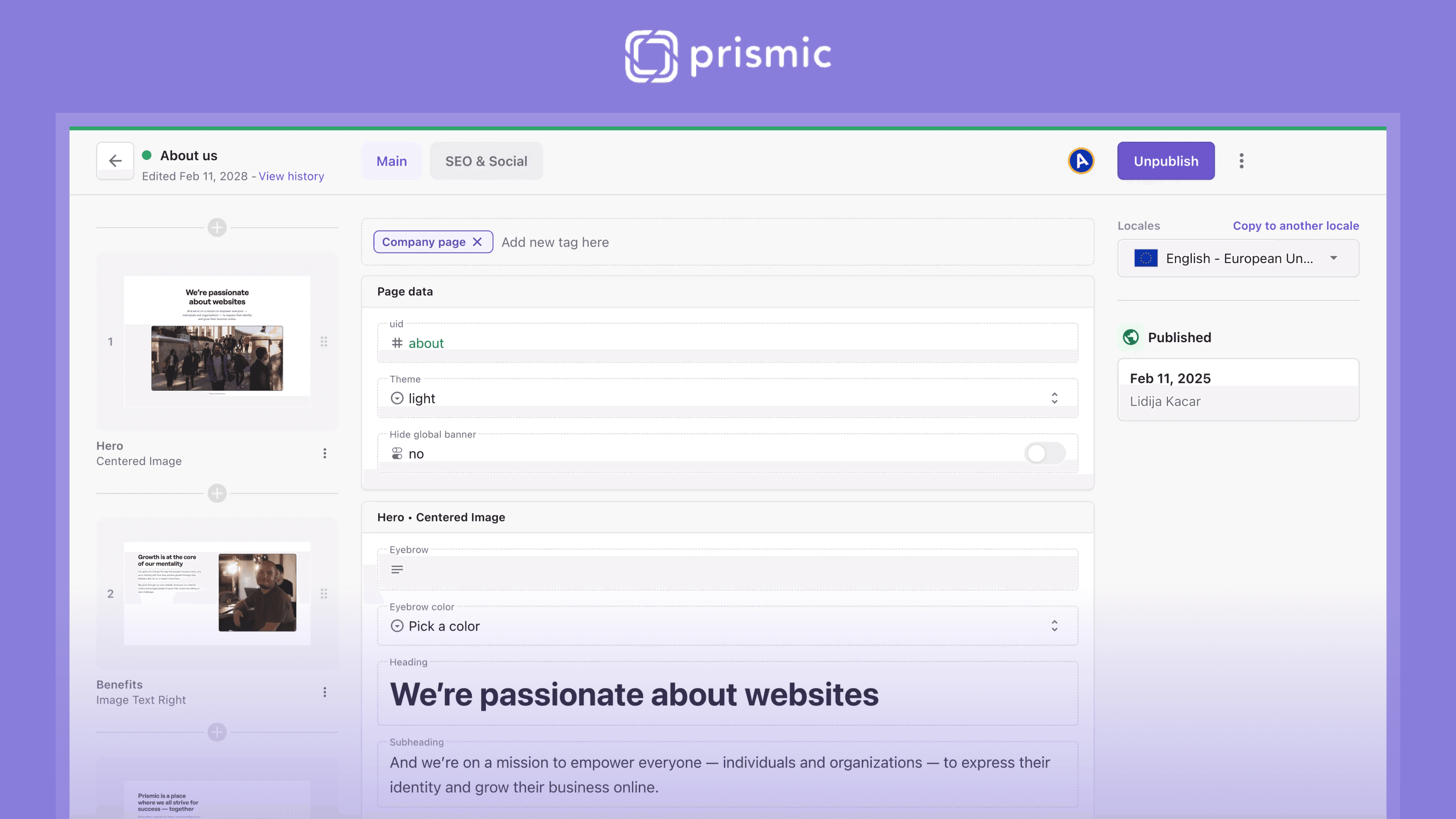
Prismic's slice-based content model encourages modular, reusable content architecture. The platform has been steadily improving and offers a good balance of structure and editorial usability.
Strengths:
- Slice-based content model encourages modular, reusable content architecture
- Clean editing experience that's approachable for non-technical editors
- Solid developer tooling, particularly strong for Next.js projects
- Balanced approach between structured content and editorial usability
Best fit: Mid-market organizations that want a simpler, more opinionated content model than Contentful without enterprise-tier complexity or pricing.
Tradeoffs:
- Slice-based model can feel constraining if content doesn't fit neatly into modular components
- Less flexible than Sanity or Contentful for deeply custom content models
- Smaller community and ecosystem than top-tier platforms
Headless WordPress
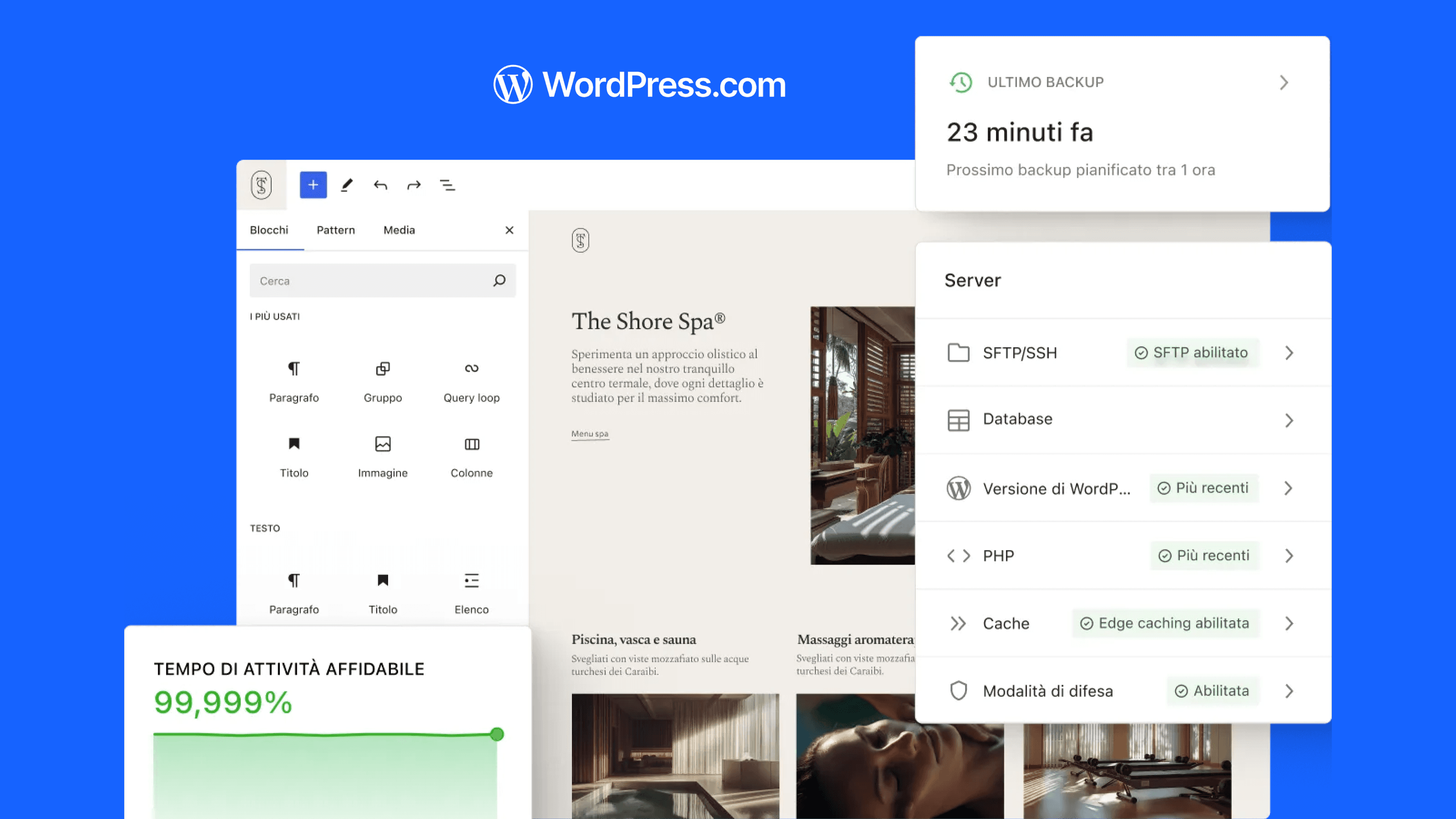
WordPress powers approximately 42.5% of all websites, making it by far the most widely used platform on the web. Using it as a headless CMS (content management in WordPress, frontend delivery through the REST API or WPGraphQL to a separate application) is a real option for teams with existing investments.
Strengths:
- Familiar editorial interface that existing WordPress editors already know
- Incremental migration path to a modern frontend without retraining content teams
- REST API and WPGraphQL provide functional headless delivery
- Largest plugin ecosystem of any CMS, useful for specialized requirements
Best fit: Organizations with significant existing WordPress investments where retraining editors on a new CMS is a bigger obstacle than the technical implementation.
Tradeoffs:
- WordPress wasn't designed to be headless, and the developer experience reflects that
- Performance, security and maintenance overhead remain WordPress concerns regardless of frontend
- Editorial experience is familiar but dated compared to modern headless interfaces
- REST API and WPGraphQL work, but are rougher than purpose-built headless platforms
Strapi
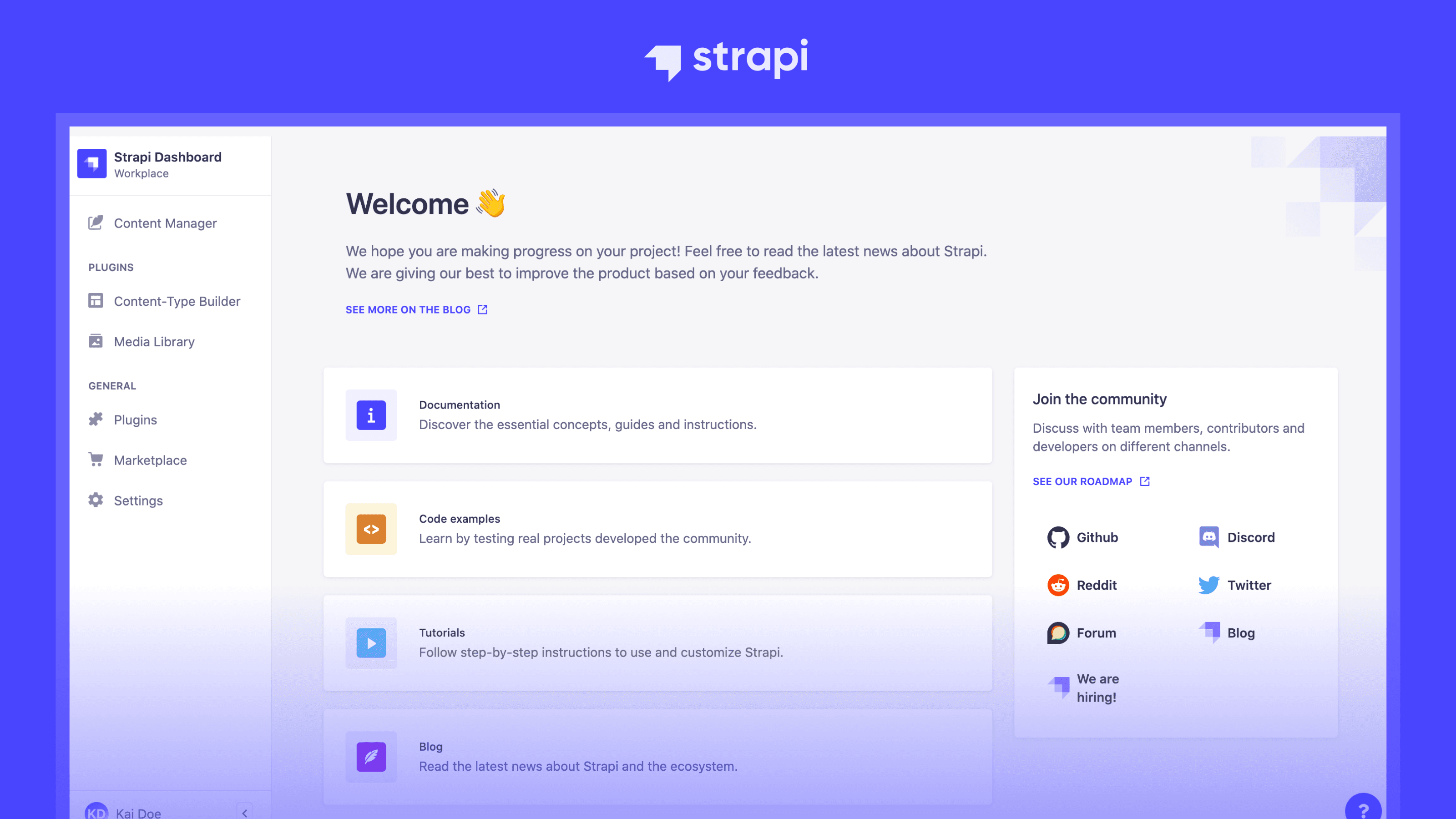
Strapi is the most established open-source headless CMS, with over 70,000 GitHub stars and an active community. Strapi Cloud offers a hosted option for teams that prefer not to manage infrastructure.
Strengths:
- Full source code access with self-hosting on your own infrastructure
- SQL and NoSQL database support for flexibility in data architecture
- Active open-source community with over 70,000 GitHub stars
- Strapi Cloud option for teams that want hosted infrastructure
- Maximum backend control for developer-centric teams
Best fit: Organizations that need full infrastructure control for compliance or regulatory reasons, or where commercial CMS licensing is impractical.
Tradeoffs:
- Self-hosting means your team owns maintenance, security updates and scaling
- Total cost of ownership frequently exceeds SaaS alternatives when personnel and infrastructure are factored in
- Editing experience is functional but not competitive with marketing-focused platforms
- Running at enterprise scale requires meaningful DevOps investment
Payload
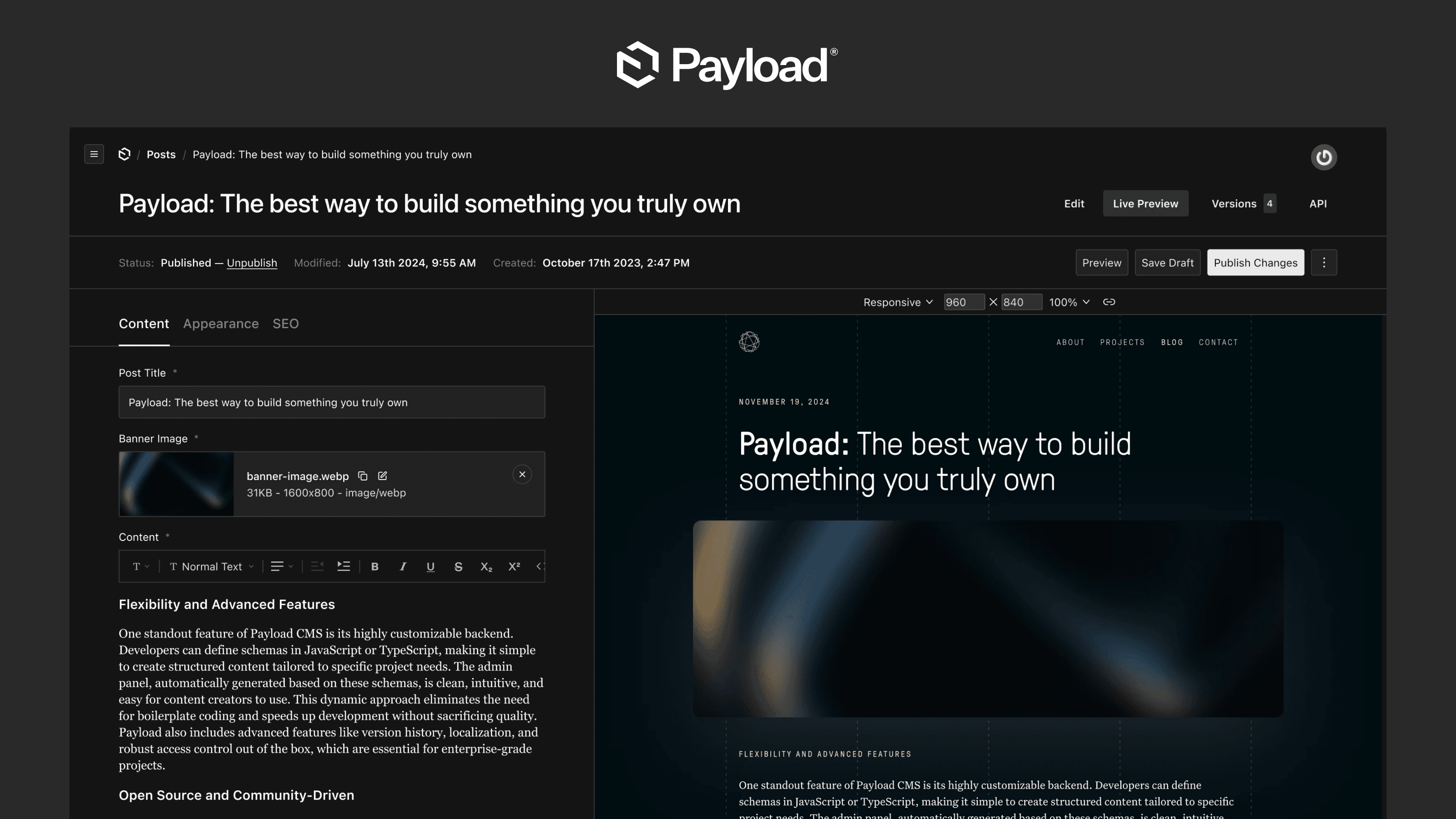
Payload is a newer entrant generating interest among developer-focused teams. It's open-source, built on Node.js and TypeScript and can be self-hosted or used via Payload Cloud.
Strengths:
- Code-first content modeling defined entirely in TypeScript, with admin UI generated from it
- Open-source and self-hostable, with managed Payload Cloud as an option
- Rapid growth trajectory: zero top-traffic websites in February 2025 to thirty by February 2026
- 40,700+ GitHub stars and roughly 105,000 weekly npm downloads
- Enterprise adoption by companies like Microsoft following Figma's acquisition in June 2025
Best fit: Developer-led teams that want a modern, TypeScript-native CMS with full code control, or projects where the CMS is embedded within a larger application.
Tradeoffs:
- Earlier in maturity curve than Sanity or Contentful
- Editing experience is developer-configured and may require investment to make comfortable for non-technical editors
- Enterprise track record is still being established
Directus
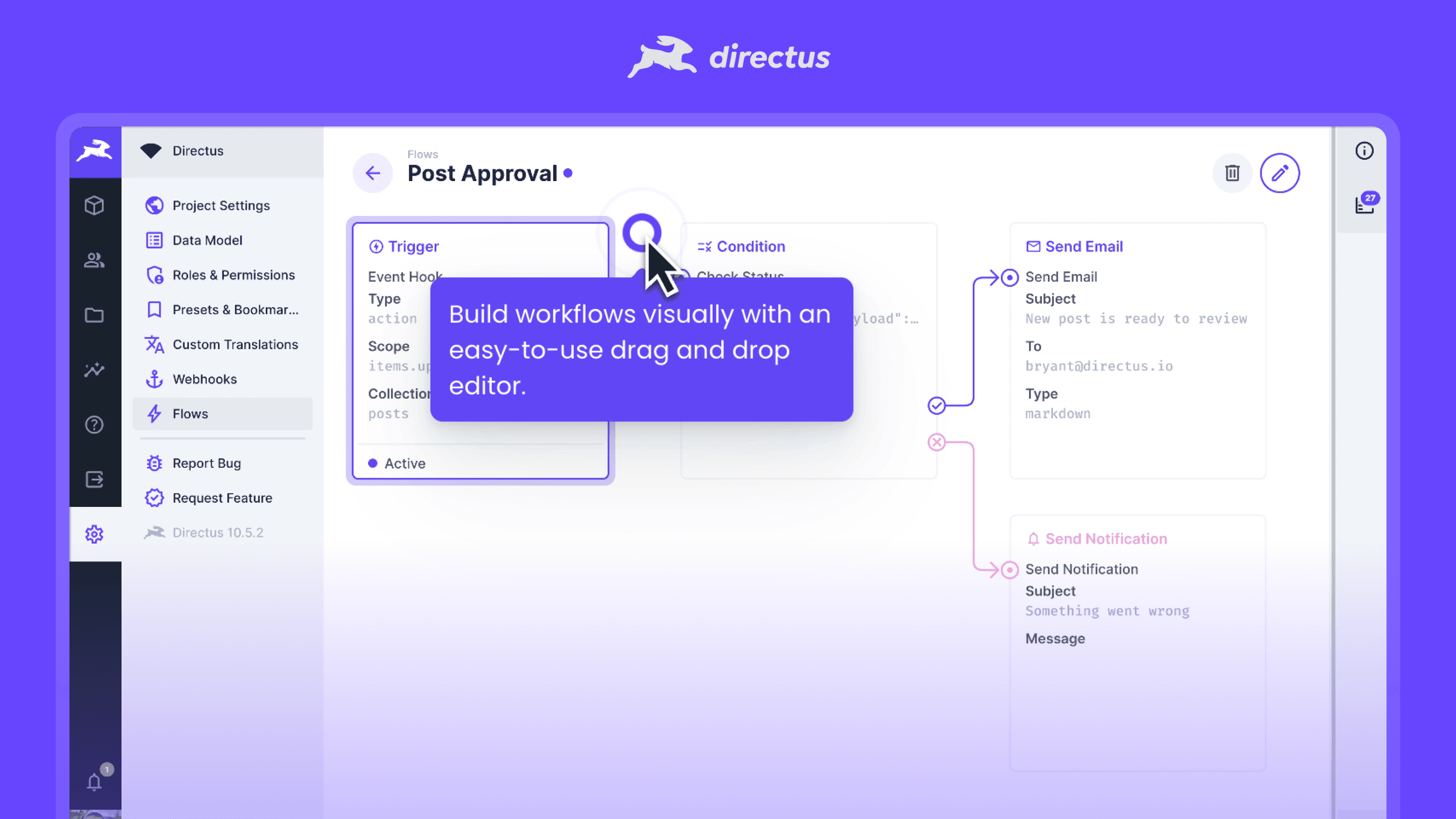
Directus takes a database-first approach, wrapping any SQL database with a real-time API layer and an auto-generated admin interface.
Strengths:
- Database-first architecture that turns existing SQL databases into content management layers
- Real-time API layer with auto-generated admin interface
- No data migration required when existing data lives in Postgres, MySQL or another SQL database
- Powerful for data-heavy applications that need content management on top of structured data
Best fit: Organizations with existing SQL databases they want to manage through a CMS interface, particularly data-heavy applications.
Tradeoffs:
- Editing experience is functional but less polished than purpose-built content platforms
- Content modeling is tied to database schema design, limiting editorial-friendly content structures
- Less intuitive for traditional content management workflows
Hygraph
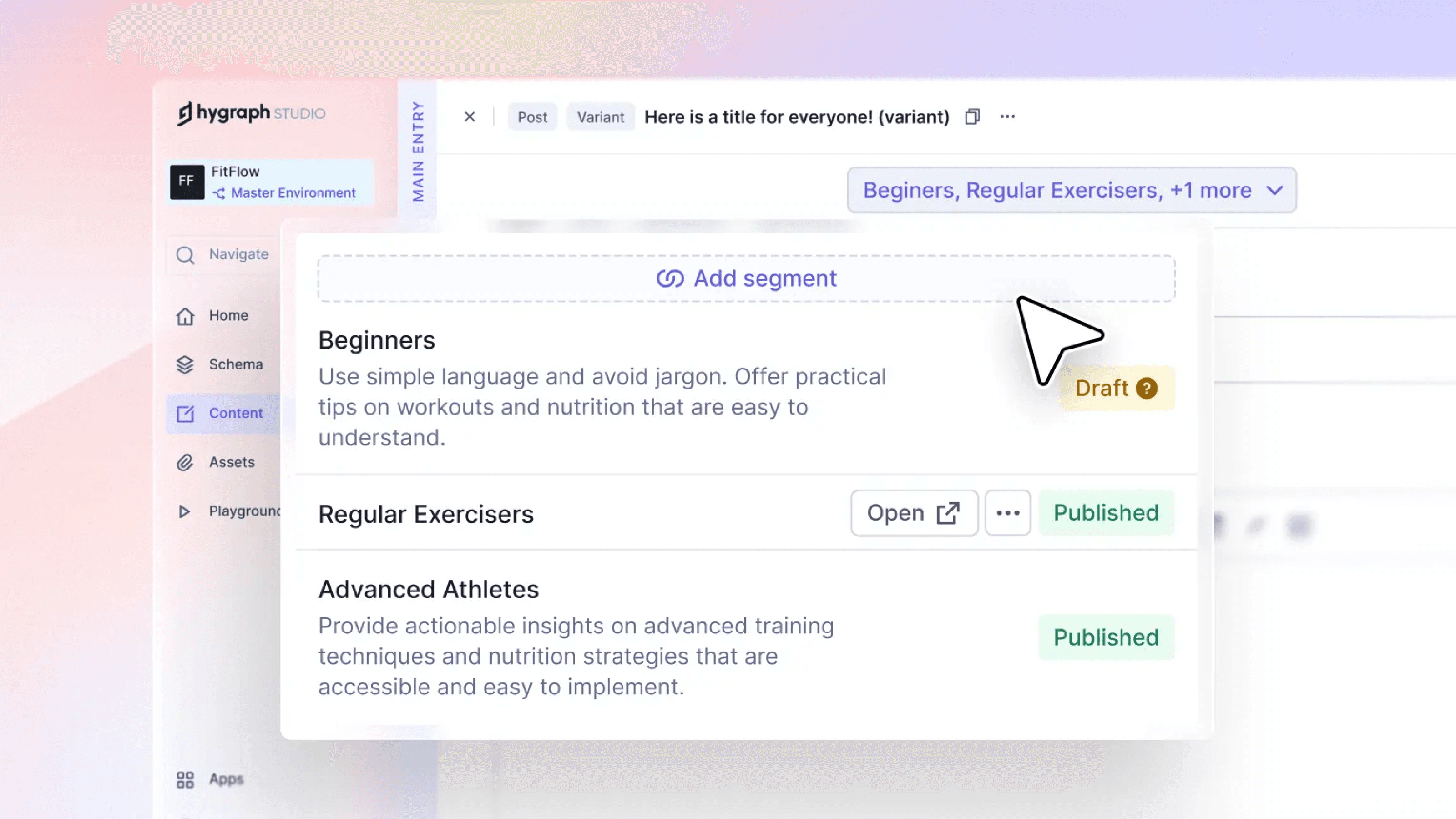
Hygraph (formerly GraphCMS) is a GraphQL-native headless CMS built around a visual schema editor, with all content accessed through a GraphQL API.
Strengths:
- GraphQL-native architecture purpose-built for teams committed to GraphQL
- Visual schema editor for content model design
- Content federation for querying multiple sources through a single GraphQL endpoint
- Strong fit for GraphQL-invested teams
Best fit: Teams committed to GraphQL who want a CMS built natively around that query language.
Tradeoffs:
- GraphQL-native approach is a constraint for teams that prefer REST or alternatives like Sanity's GROQ
- Less enterprise traction and brand recognition than Contentful or Sanity
- Smaller community and ecosystem than top-tier platforms
Real World Enterprise Examples of Headless CMS
The case for headless is easier to make when you've seen what enterprise teams do once the constraints lift. Three recent migrations show how different the right-platform decision looks across companies.
ServiceTitan
ServiceTitan is the leading enterprise software platform for the home and commercial services industry. Their previous site couldn't keep pace with the marketing team's velocity, and integrating with their sales and marketing stack was a constant drag on engineering.
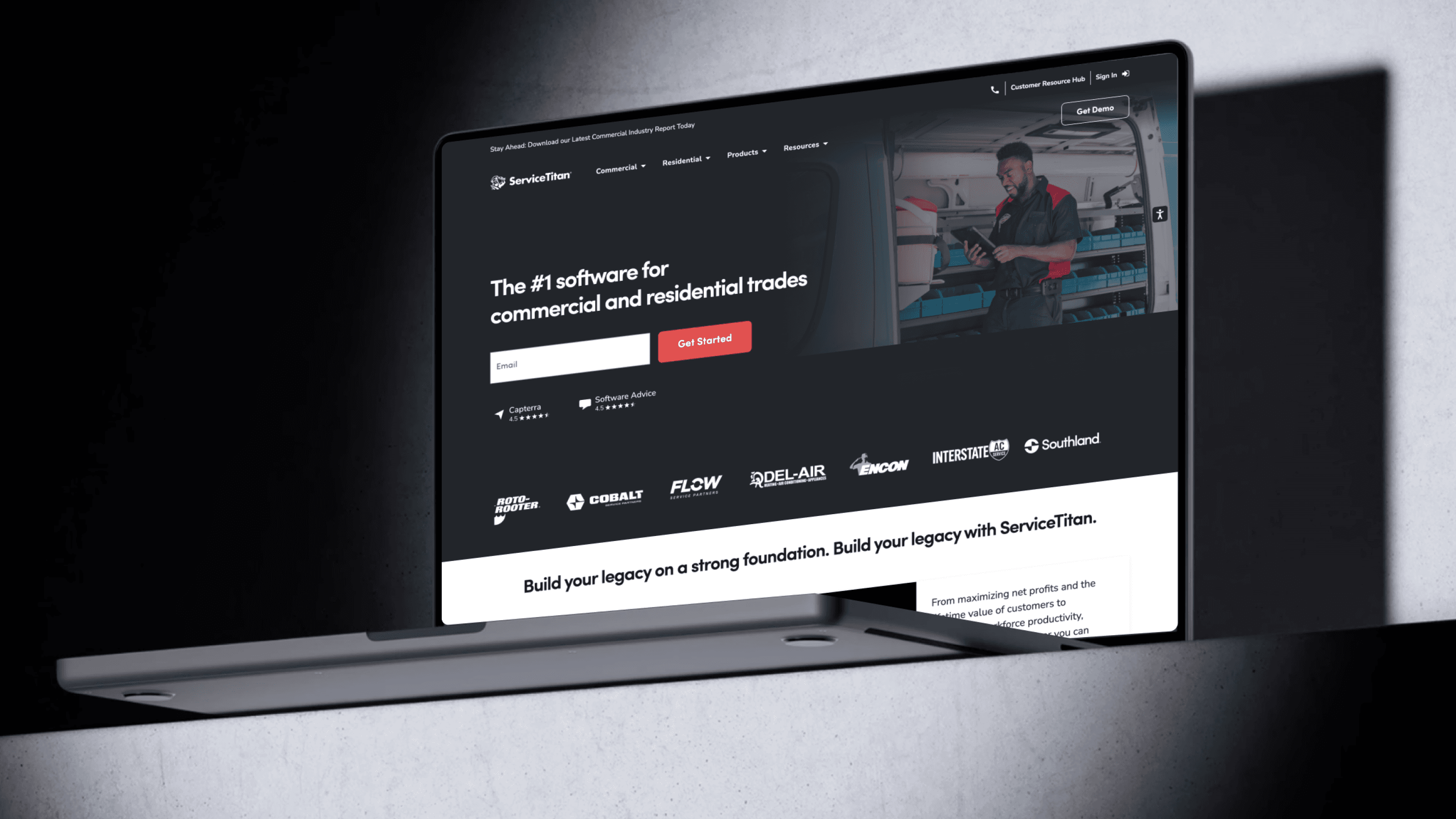
Stack: Contentful paired with a Gatsby frontend.
Outcome: Contentful gave content editors the autonomy to launch campaigns at scale without filing tickets. The Gatsby frontend handled the performance and integration requirements that came with enterprise traffic volume.
Gong
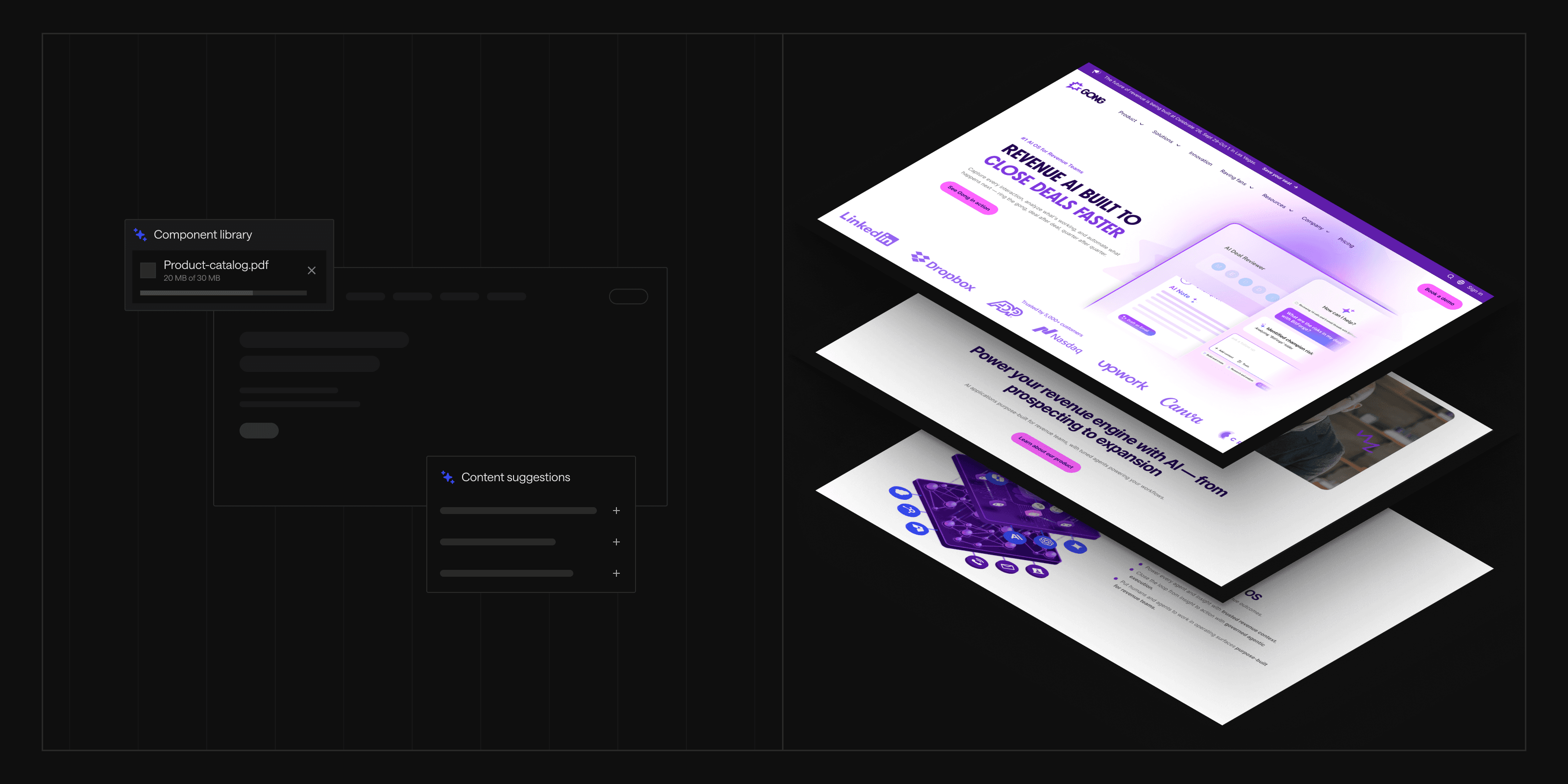
Gong had outgrown WordPress as it scaled into a global revenue intelligence platform. Plugin bloat, security risk and manual workflows meant even small updates pulled engineering time. Campaign pages took weeks. A/B tests stalled before they shipped.
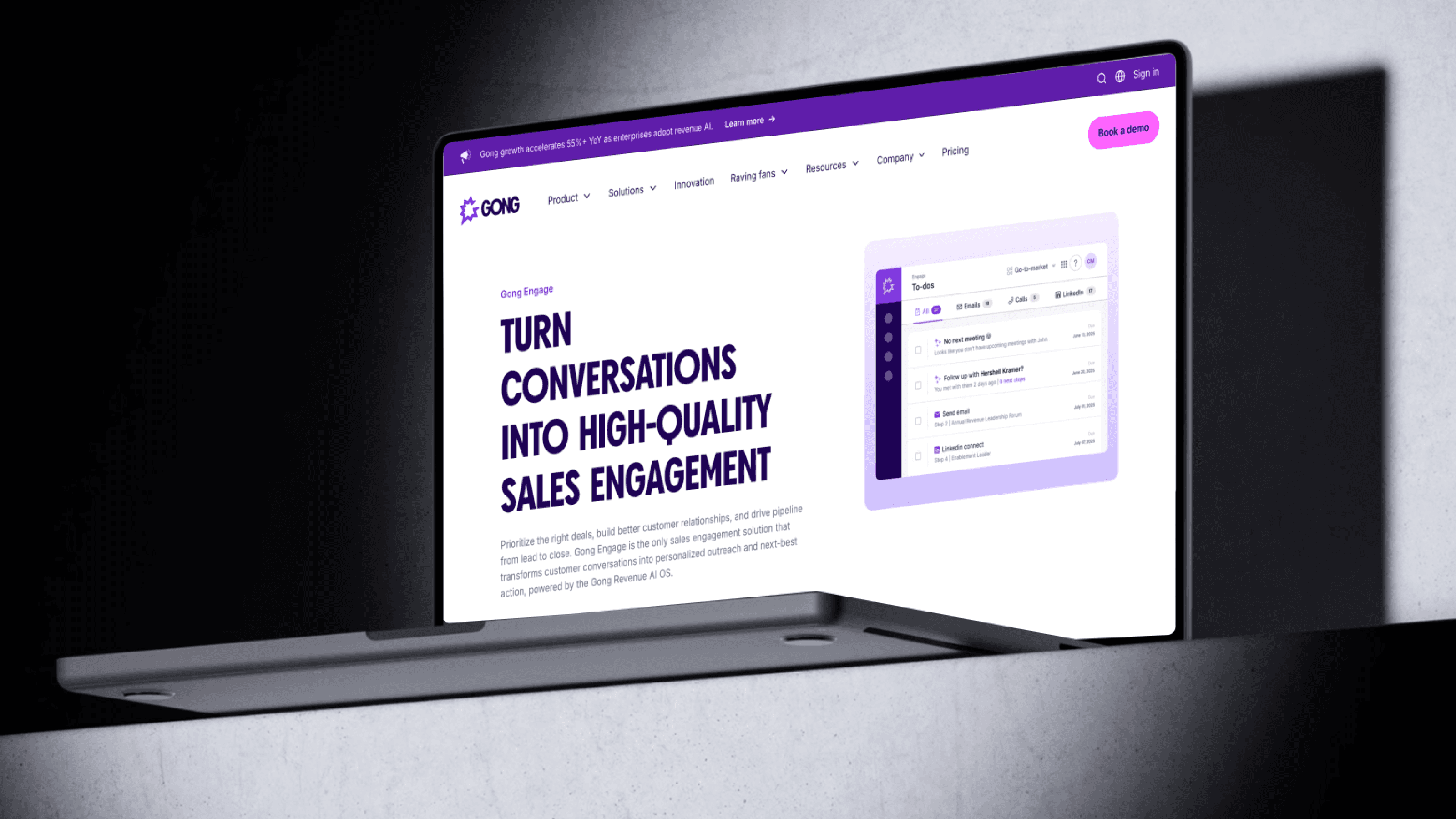
Stack: Sanity CMS paired with a Next.js frontend and Vercel hosting.
Outcome: The new architecture gave Gong's marketing team modular content blocks they could rearrange without developer involvement, structured localization workflows for global expansion and a composable foundation that supports personalization and experimentation. Campaigns that took weeks now launch in hours.
Calendly
Calendly needed to pivot from a pure PLG motion to an up-market enterprise sales strategy. The previous Contentful environment was rigid enough that content editors couldn't keep up with the brand and product changes that pivot required.
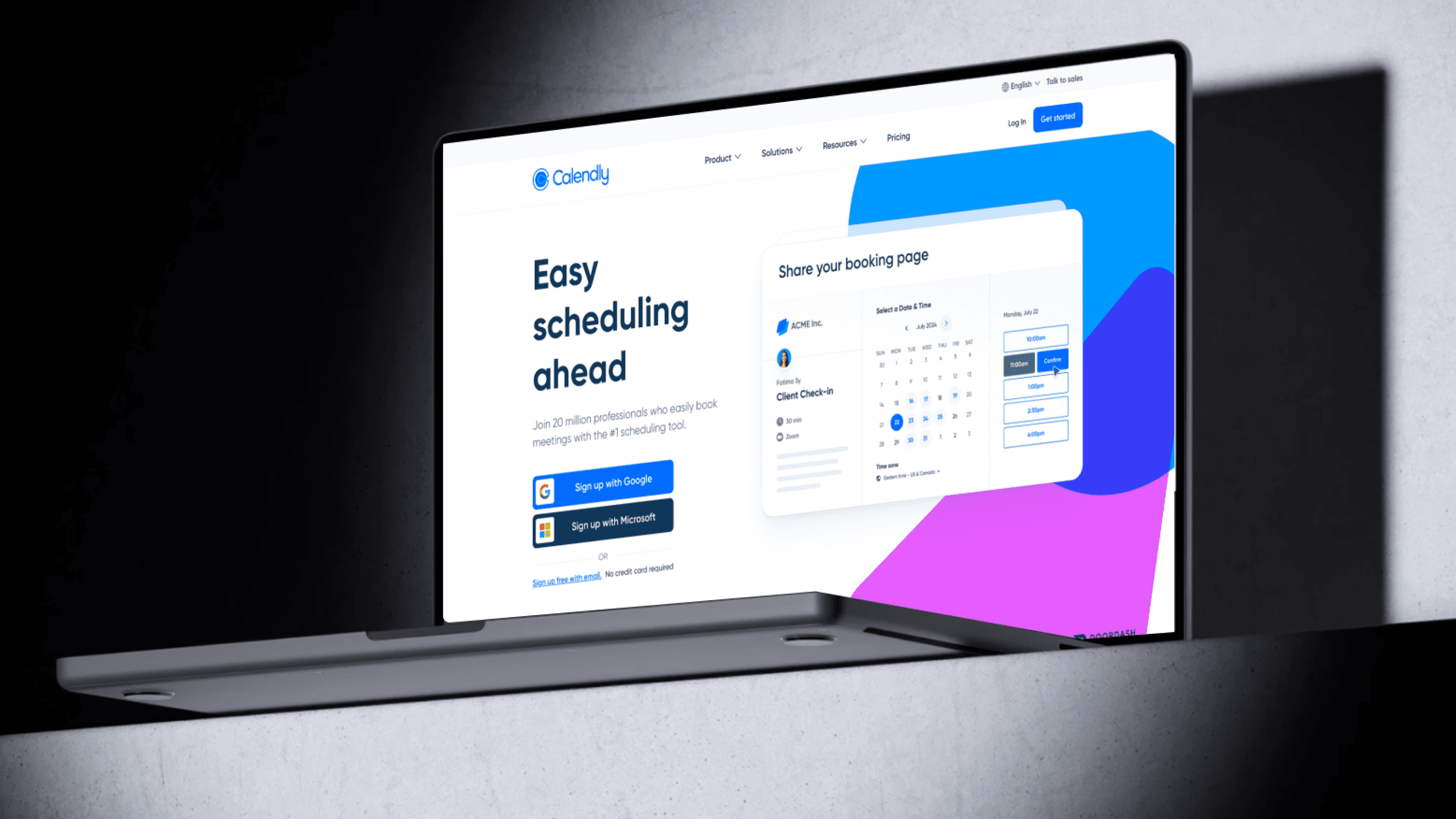
Stack: Contentful, Gatsby and HubSpot, rebuilt around a modular design system and component-based templates.
Outcome: Editors got pre-built components, real-time previews and the ability to ship new pages without engineering involvement. The new architecture supported solutions pages organized by role, industry and company size, a redesigned enterprise pricing experience and the marketing stack integrations Calendly needed for account-based selling.
Each of these teams chose a different platform because each had a different content model, a different team structure and a different growth trajectory. That's the point. The right CMS is the one that fits the operational reality, not the one with the most features on the comparison sheet. (See also UpKeep's approach to AI-enabled web experiences on a composable stack, for teams thinking about how headless supports an AI-native roadmap.)
How to Narrow the Field
Rather than scoring features in a matrix, here's how these platforms cluster against the decision factors that matter most in enterprise evaluations.
| Decision priority | Best-fit platforms | Why |
|---|---|---|
| Developer flexibility and content model control | Sanity, Strapi, Payload, Directus | Schema-driven control, with Sanity managed and the others open-source or self-hosted |
| Marketing autonomy and visual editing | Storyblok, Builder.io | Visual editing closest to the rendered experience; Storyblok uses CMS components, Builder uses production components |
| Enterprise governance and ecosystem maturity | Contentful, Contentstack | Deepest enterprise track records, with Contentful's ecosystem and Contentstack's editorial workflows |
| Budget or infrastructure constraints | Strapi, Payload, DatoCMS, Prismic, Headless WordPress | Open-source options, lower-priced platforms or building on existing WordPress investments |
| Specific technical preferences | Hygraph, Directus, Payload | GraphQL-native, database-first and TypeScript-native respectively |
Most enterprise evaluations narrow to two or three finalists from these clusters. The comparison on paper gets you to the shortlist. A proof of concept with your actual content model and your actual team is what validates the final choice.
For teams working through a CMS evaluation that want a perspective from a team that has implemented most of these platforms, talk with Webstacks.

Your website is your biggest growth lever—are you getting the most out of it? Schedule a strategy call with Webstacks to uncover conversion roadblocks, explore high-impact improvements, and see how our team can help you accelerate growth.

I founded Webstacks to help B2B tech companies build websites that actually perform. I'm passionate about bridging strategy, design, and engineering to create scalable web experiences.